
The Zenera Platform
An AI that builds AI systems - and proves they work before they run.
The Meta-Agent
At the center of Zenera sits the Meta-Agent - the user's single point of interaction for designing, building, and evolving agentic systems.
The Meta-Agent is not a chatbot. It is not a code generator. It is an AI system architect that translates business requirements into complete, verified, production-ready multi-agent systems.
From Problem to Production
Describe the Problem
Users describe what they need in natural language. No templates. No configuration files. No system design expertise required.
The Meta-Agent Designs the Architecture
The Meta-Agent decomposes the problem into specialized agents, defines their roles, selects appropriate models, and wires the entire system:
- System instructions for each agent - precisely scoped roles and behaviors
- Prompt templates with domain-specific context and constraints
- Tool definitions - API integrations, database queries, file operations, custom functions
- Handoff logic - which agent calls which, under what conditions, with what context
- Workflow definitions - Temporal-backed durable execution for multi-step processes
- Activation triggers - which storage events, workflow signals, external webhooks, or human interactions wake each agent automatically
- UI components - forms, dashboards, approval dialogs tailored to the use case
Verification Before Deployment
This is where Zenera diverges from every other platform. Before a generated system runs in production, the Meta-Agent proves it is coherent:
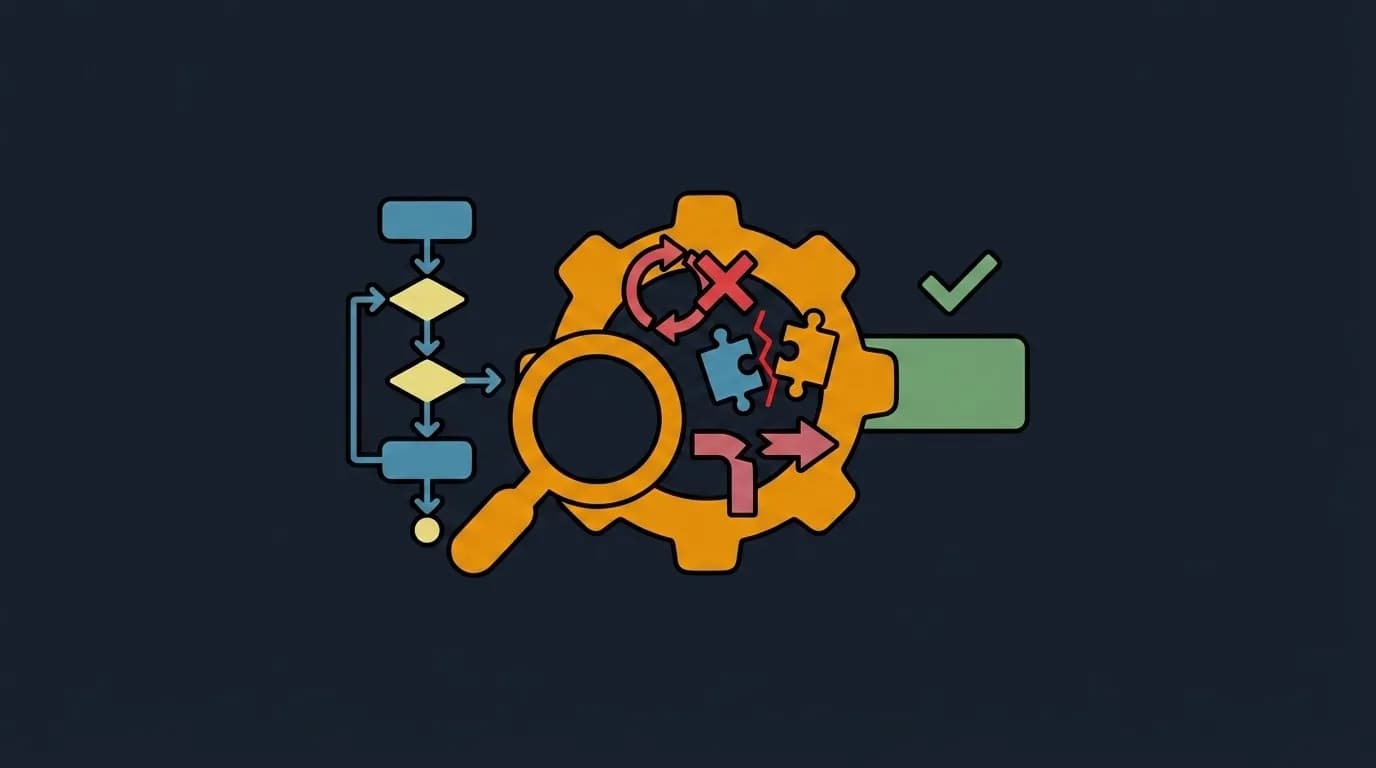
- Semantic consistency analysis - All prompts, tool descriptions, and handoff instructions are analyzed as a unified corpus. Contradictions and ambiguities are detected before deployment.
- Trajectory simulation - The full graph of execution paths is traced. Loops, dead ends, unreachable agents, and non-terminating patterns are identified and eliminated.
- Tool adequacy verification - Every instruction given to an agent is checked against its available tools.
- Handoff completeness - Every handoff path is verified to have a well-defined exit condition.
- Trigger safety analysis - All event activation sources are checked for cascade loops, excessive fan-out, and RBAC compliance before deployment.
- Boundary condition analysis - Adversarial scenarios are generated and traced through the system to reveal edge-case failures.
Deploy Anywhere
Deploy to your private cloud, an air-gapped data center, a developer laptop, or a Kubernetes cluster. The platform adapts to your infrastructure. Your data never leaves your perimeter.
Continuous Evolution
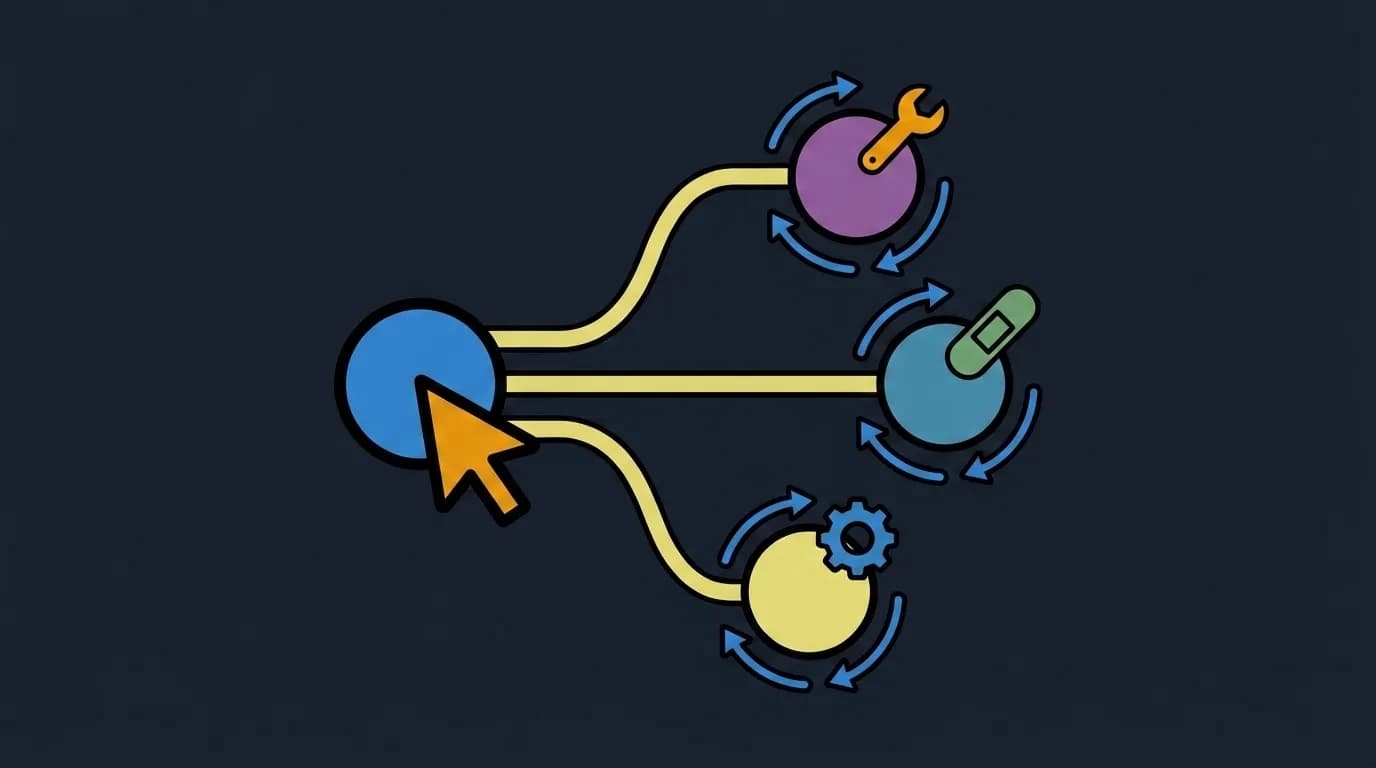
The Meta-Agent doesn't stop working after deployment. Users modify running systems through natural conversation. Each modification triggers a full re-verification cycle: impact analysis, trajectory re-simulation, and cascading updates across all affected agents.
Always-On: The Event-Reactive System
Most AI platforms wait to be asked. Zenera agents wake up on their own - triggered by the enterprise systems around them, not by human prompts.
The Meta-Agent designs not just what an agent does, but when and why it activates. Every generated system includes a complete activation model with four trigger classes:
| When | Trigger Class | Example |
|---|---|---|
| Data changes | Storage Event | A new dataset commits to LakeFS → the analysis agent runs automatically |
| Process progression | Workflow Event | An upstream agent completes → the next stage begins; an SLA timer expires → escalation fires |
| External signal | External Event | A monitoring alert arrives via webhook → the incident response agent activates |
| Human message | Human Interaction | A user sends a chat → the relevant agent picks it up and responds in that same thread |
No Events Lost - By Architecture
Every activation path delivers its trigger as a durable Temporal signal - architecturally different from a fire-and-forget event bus:
- If the target agent is restarting, the signal queues and delivers when the agent recovers
- If the activation itself fails, the triggering storage commit can be rolled back atomically
- Every trigger is logged with the full payload, the initiating principal, and the agent response - creating an unbroken audit chain from event to outcome
Agents Interoperate, Not Just Integrate
The Meta-Agent wires agents into dependency graphs, not simple chains:
- 1Independent agents run in parallel - no artificial serialization
- 2Typed output schemas enforce clean handoff contracts - downstream agents validate inputs at every boundary
- 3Saga-pattern compensation handles partial failures across long-running flows - if a later step fails, earlier committed steps are safely undone
- 4Circular activation chains are detected and blocked before deployment
Governance Before the Agent Acts
Before any activation reaches agent logic, Zenera evaluates three gates. Events that fail are quarantined, logged, and surfaced for human review - not silently dropped.
- RBAC - Is the triggering principal (human, system, or upstream agent) authorized to activate this workflow?
- Data classification - Does the incoming payload touch data the activated agent is permitted to read?
- Rate limits - Is this activation part of a runaway cascade or a legitimate process?
"Other platforms give agents access to event buses. Zenera gives agents an event-reactive nervous system with transactional memory and enterprise governance built in."
Why Multi-Agent Systems Need a Meta-Agent
The Problem: No Compiler for Agents
Traditional software has compilers - formal systems that catch errors before code runs. Type errors. Missing dependencies. Unreachable code. The compiler tells you what's wrong.
Multi-agent systems have no compiler.
Agent behavior is defined in natural language: system prompts, tool descriptions, handoff instructions. There is no formal grammar. No type checker. No linker. The system is held together by informal text that a human wrote and hoped was correct.
Failure Modes of Human-Designed Agent Systems
Prompt Contradictions
Agent A: “Always escalate security issues immediately.”
Agent B: “Consolidate all non-critical alerts into a daily digest.”
Is a failed login attempt a security issue or a non-critical alert? The system has no answer - only emergent, unpredictable behavior.
Handoff Loops
Agent A hands off to Agent B for financial questions. Agent B hands off to Agent A for contextual history. Neither realizes the other will bounce it back. The system spins forever.
Tool Inadequacy
An agent is instructed to "verify the customer's identity" but has no tool that performs identity verification. It improvises - sometimes hallucinating a verification, sometimes asking irrelevant questions.
Semantic Drift Under Modification
A developer tweaks Agent C's prompt to improve its tone. This subtly changes how Agent C phrases handoff messages, causing Agent D to misinterpret intent and route tasks incorrectly. The bug is three hops removed from the change.
Why These Problems Scale Exponentially
| System Size | Agents | Possible Execution Paths | Human Ability to Verify |
|---|---|---|---|
| Small | 3 | Dozens | Manageable |
| Medium | 5-8 | Hundreds | Difficult |
| Enterprise | 10+ | Thousands | Impossible |
A system with 5 agents, each with 3 handoff targets and 4 tools, has hundreds of possible execution paths. No human can mentally simulate them all.
The Meta-Agent as Compiler, Linter, and Profiler
The Meta-Agent treats multi-agent system design as a verification problem:
Modification Safety: Change Without Fear
When a user modifies a running system, the Meta-Agent executes a full safety protocol:
- 1Applies the change to the target agent's configuration
- 2Re-analyzes all downstream impacts - How does the changed output affect agents that receive its handoffs?
- 3Re-simulates affected trajectories - Do execution paths now produce different outcomes?
- 4Reports impact assessment - "This change affects handoffs to Agent D and Agent E. Agent D's parsing may be affected. Recommend updating Agent D's input expectations."
- 5Generates the complete fix - Not just the requested change, but all cascading adjustments needed to maintain system coherence
"This is the equivalent of a compiler saying: "You changed this function signature. Here are the 14 call sites that need updating."
Agent Certification
For regulated industries, Zenera extends verification into formal certification:
- Safety property verification - Systems are checked against predefined constraints (e.g., "No agent may execute a financial transaction above $10,000 without human approval").
- Compliance posture validation - The Meta-Agent verifies that generated systems satisfy specific regulatory requirements (HIPAA, SOC 2, GDPR).
- Certified Agent seal - Systems that pass verification receive a certification artifact: a machine-readable proof of compliance at the time of certification.
- Continuous compliance monitoring - Certification is not a one-time event. The platform re-validates continuously as systems evolve and regulations change.
Key Properties of Generated Systems
Cohesive
Agents are designed together, not stitched together. Prompts are verified for semantic consistency. Handoff loops are eliminated before deployment.
Reactive
Agents activate autonomously on storage events, workflow signals, external webhooks, and human messages - no polling, no manual triggers, no lost events.
Durable
Workflows survive infrastructure failures. State is persisted at every decision point via Temporal. Activation signals queue and deliver even through restarts.
Transactional
Data operations are atomic via LakeFS. Storage mutations that trigger agents can be rolled back if the agent fails.
Observable
Every decision is traced end-to-end with OpenTelemetry. Grafana dashboards are generated alongside agents.
Governable
RBAC, audit logs, and approval workflows are first-class. Every activation is governance-checked before agent logic runs.
Evolvable
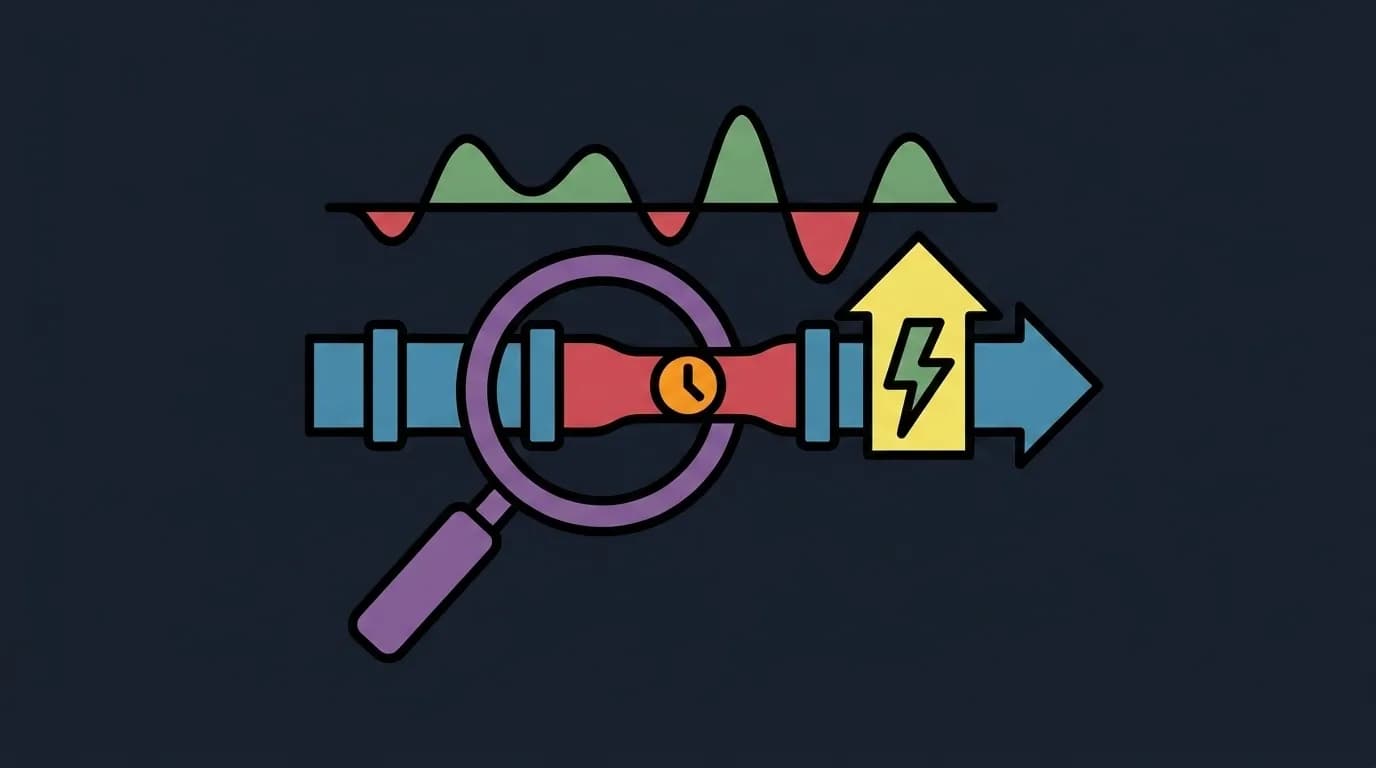
The Meta-Agent continuously monitors, optimizes, and proposes architectural improvements based on production telemetry.
See the Platform in Action
Discover how the Meta-Agent designs, verifies, and evolves production-grade multi-agent systems.
Request a Demo